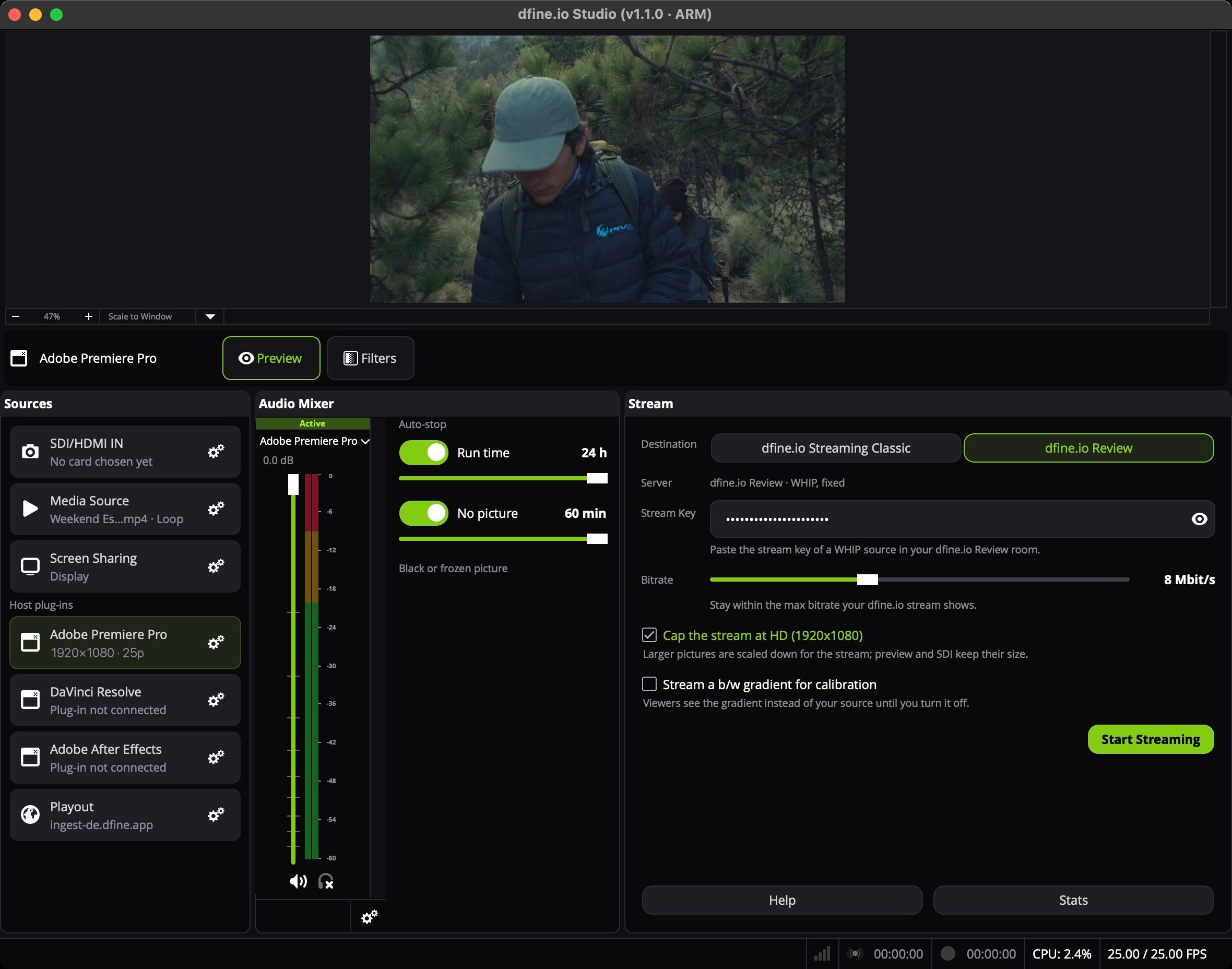
1. Install the plug-in
1
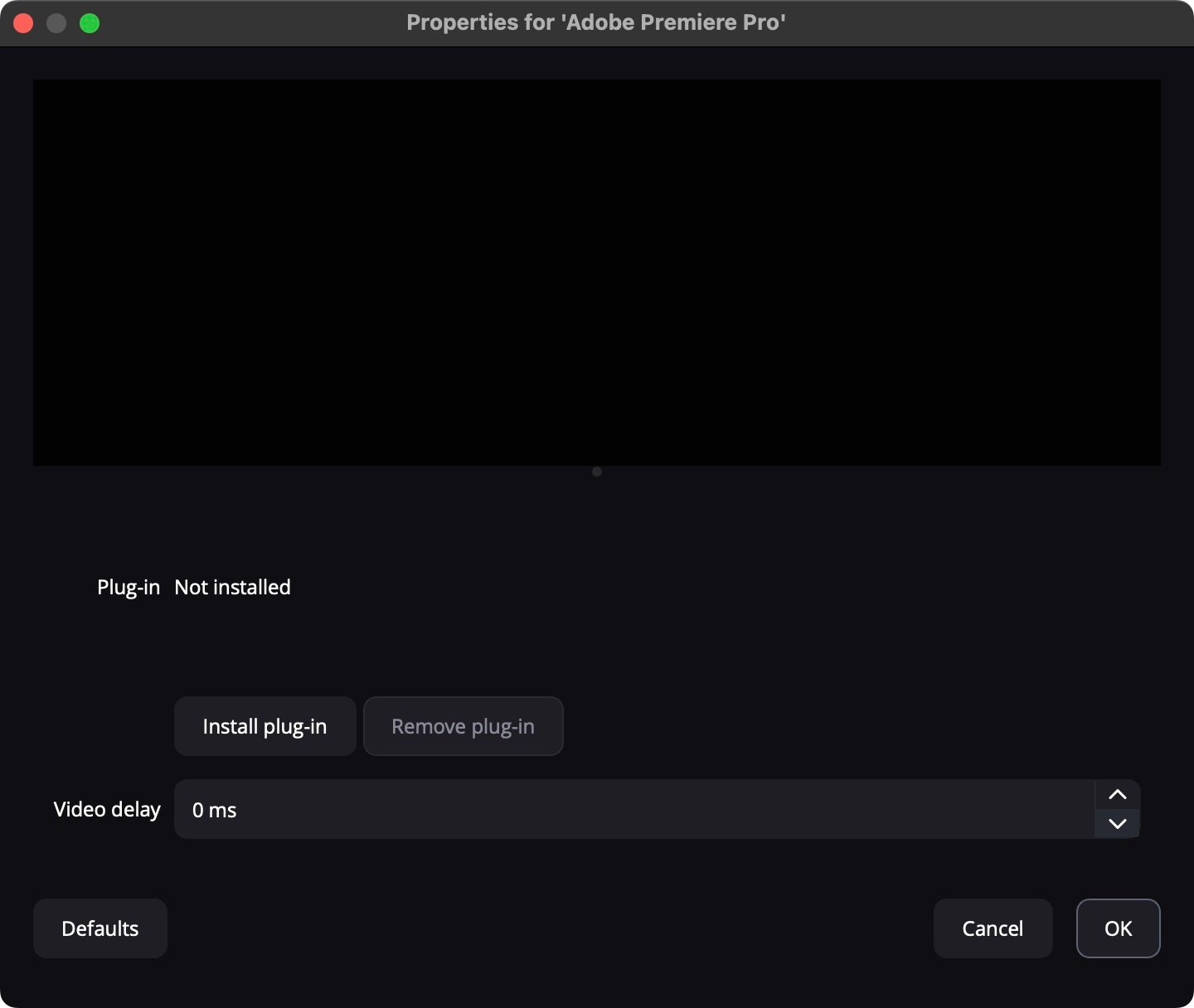
Open the gear
In Studio’s Sources panel, click the gear on Adobe Premiere Pro. Plug-in reads Not installed.
2
Install
Click Install plug-in. No password is needed, the plug-in goes into your own Adobe plug-in folder.
3
Restart Premiere Pro
Quit Premiere Pro and start it again. It reads its plug-in folder only at launch.
2. Switch on Mercury Transmit
1
Open the playback settings
Go to Premiere Pro → Settings → Playback.
2
Enable Mercury Transmit
Tick Enable Mercury Transmit. Without it the device list stays inactive.
3
Select dfine.io Transmit
Tick dfine.io Transmit under Video Stream, and under Audio Stream if you want sound.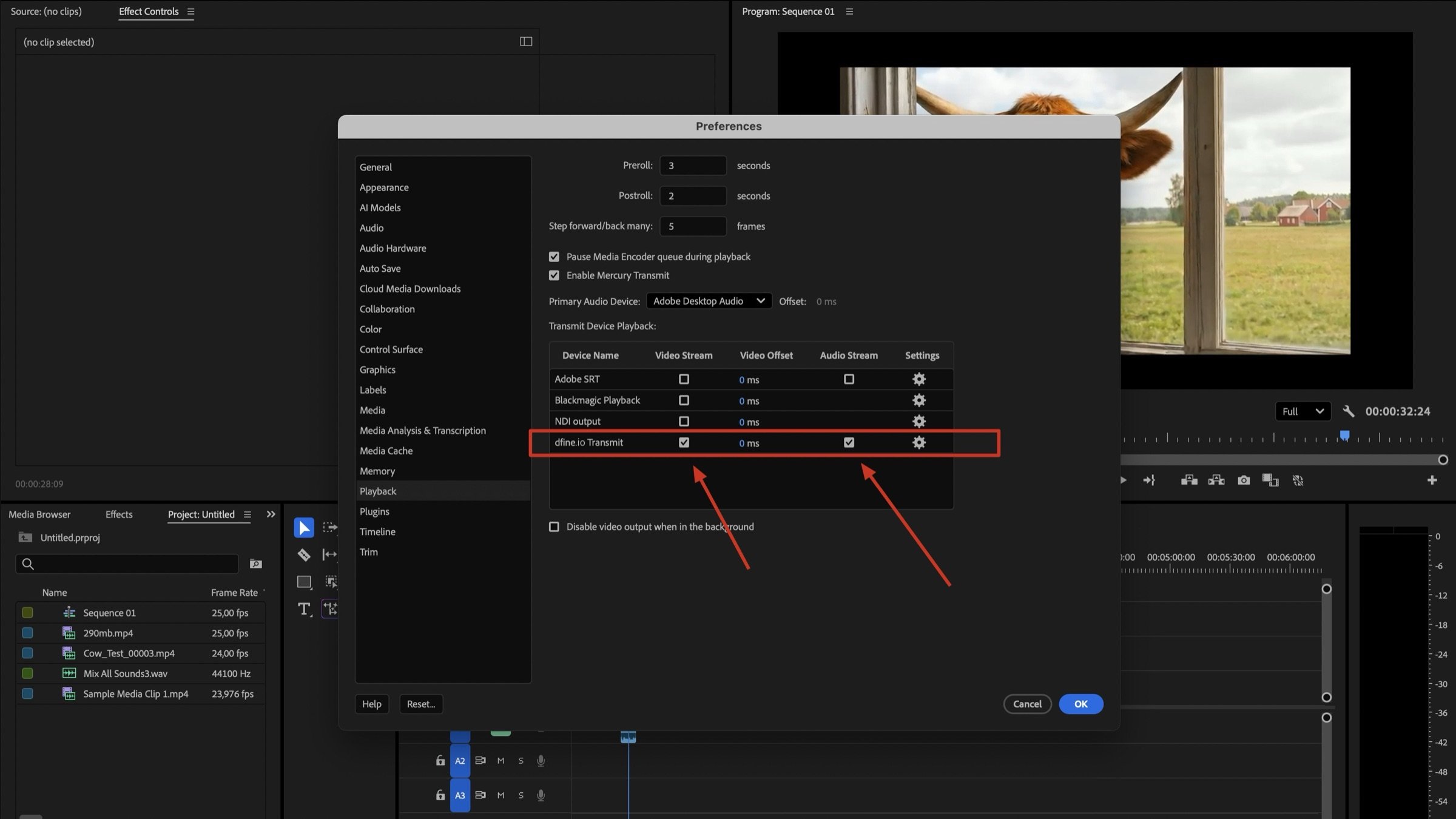
3. Pick where it goes
- dfine.io Review
- dfine.io Streaming Classic
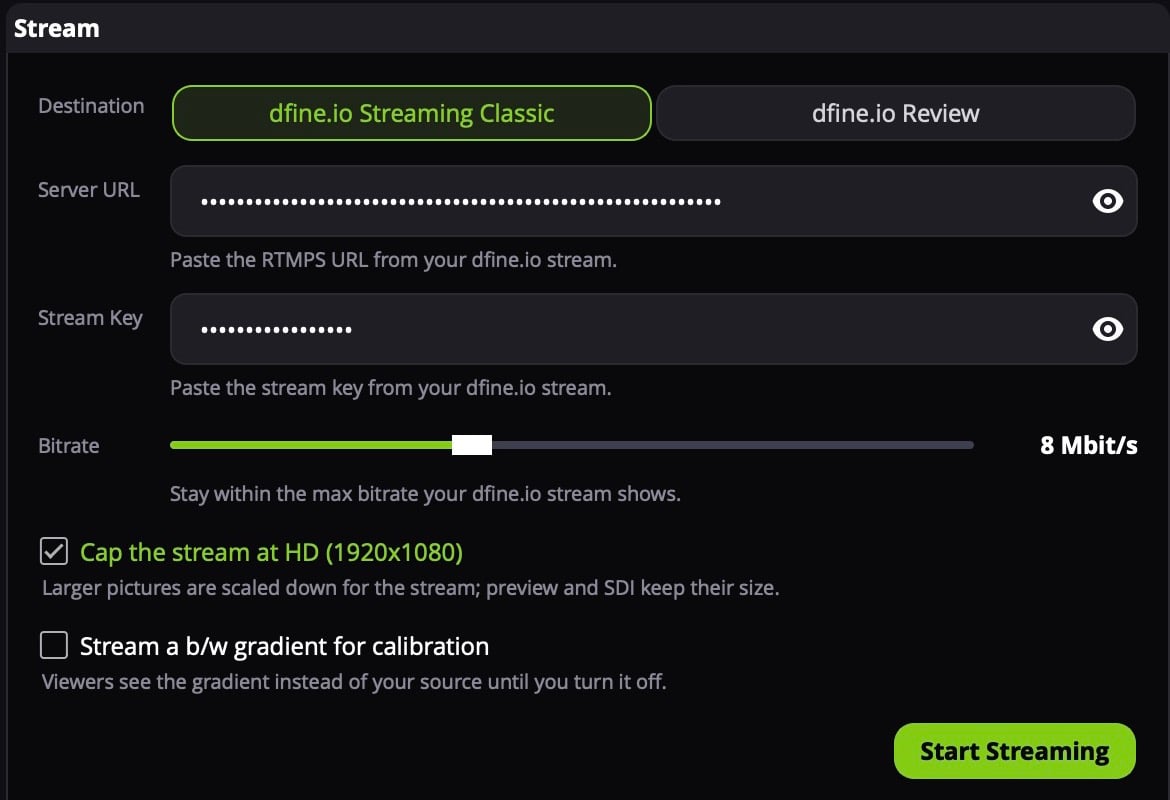
In Review, open the room and create a source with the type WHIP, or use Quick Create. Click Copy Stream Key.In Studio’s Stream panel, set Destination to dfine.io Review. Server reads dfine.io Review · WHIP, fixed. Paste the key into Stream Key.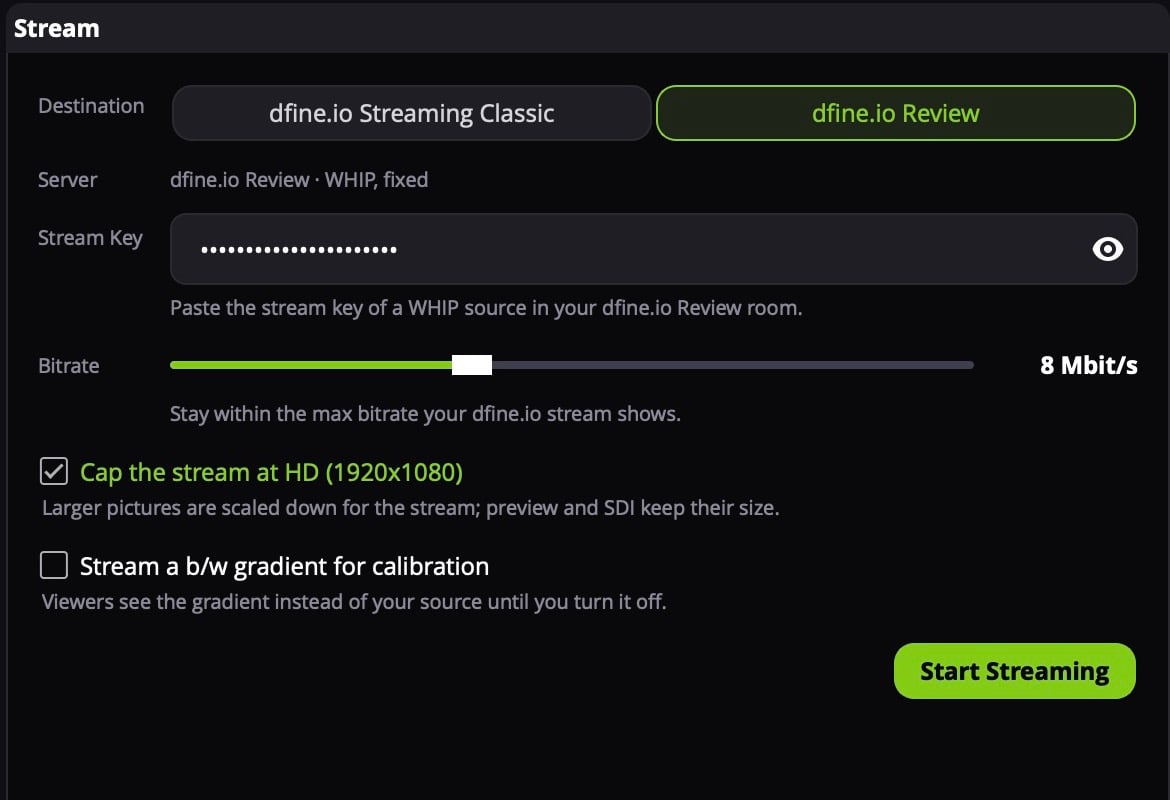
4. Start
Play your sequence. In Studio the Adobe Premiere Pro row now shows the size and frame rate, for example1920×1080 · 25p, instead of Plug-in not connected. Click the row to put it on air, then click Start Streaming. Your client sees the picture a few seconds later.